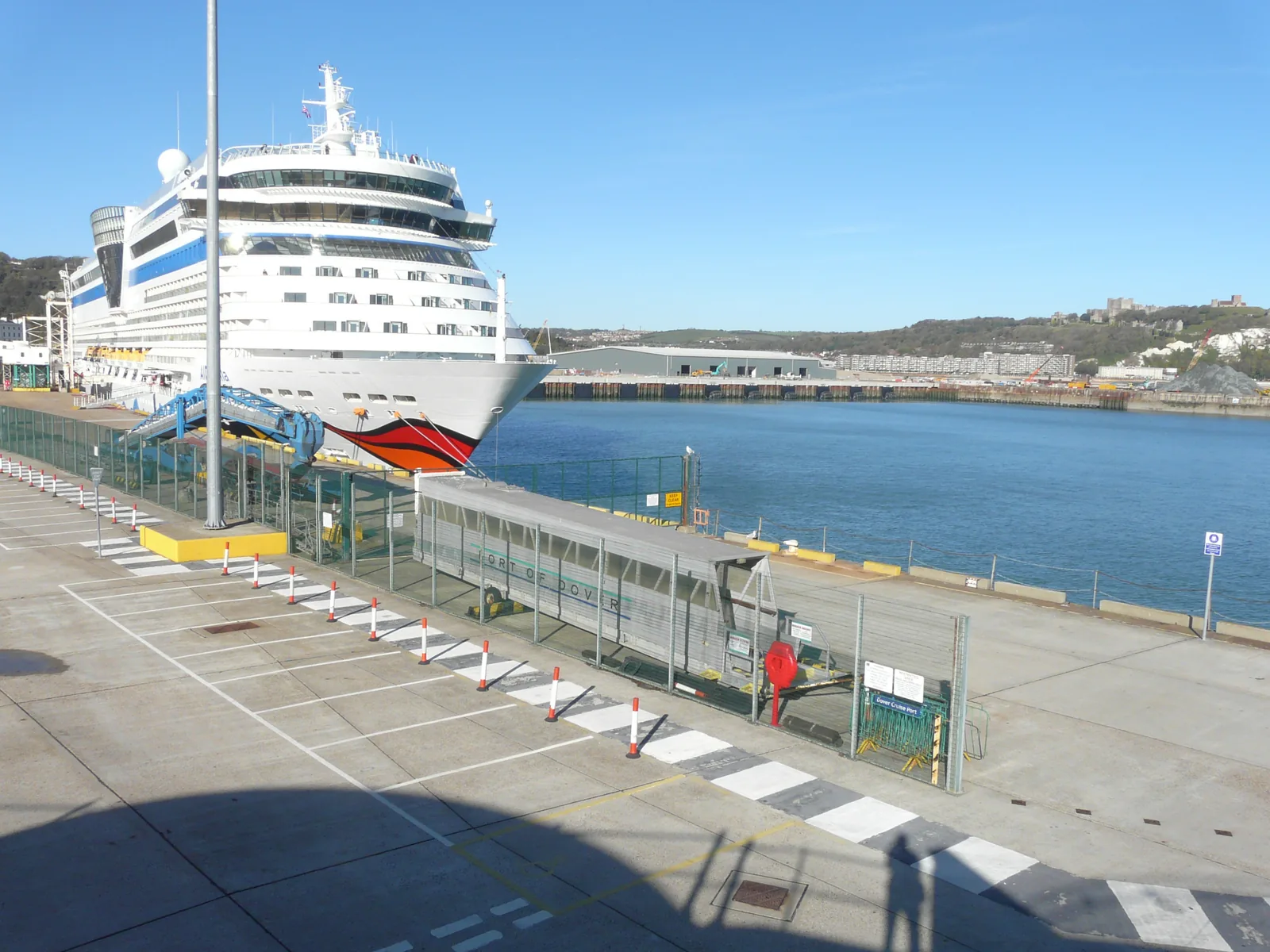
Dover has two cruise terminals a few hundred metres apart, plus a third berth used by ships calling in for the day. Saga sails from Cruise Terminal 1. Carnival and Holland America use Cruise Terminal 2. Berths can change from one sailing to the next, so check your boarding pass before you set off.
Dover moves people through quickly, and the terminals are geared to that rather than to waiting about. This guide covers which terminal you need, where to park, how to get there by road and rail, and what is worth bringing with you.
Which Terminal Do You Need?
Cruise Terminal 1
Cruise Terminal 1 is the old Dover Marine railway station, built in 1914 and converted rather than replaced, so it still reads as a station inside. Saga sails from here.
CT1 and CT2 share an approach in the Western Docks at CT17 9DQ, what3words ///goodbye.songbirds.surfacing. WD4 is reached separately, from New Marina Curve Road at CT17 9FQ, what3words ///this.overhear.guards. Putting the wrong one into a sat nav sends you to the other side of the harbour.

Cruise Terminal 2
Cruise Terminal 2 is the one most Dover passengers use. It was purpose-built in 2000, and its departure lounge sits on the first floor looking out over the harbour, the White Cliffs and Dover Castle, which makes it the better of the two for a wait. Carnival and Holland America both sail from Cruise Terminal 2, and so does Viking most of the time.
The WD4 Berth
WD4 is the third berth and it is not an embarkation terminal. It is a multipurpose berth for ships calling at Dover, and passengers walk from the ship along the marina curve to the seafront. If your boarding pass says WD4, you are visiting Dover rather than starting a cruise there.
Berths do move between sailings, so whatever the usual pattern, your boarding pass is the one to go by.
What Is at the Terminal, and What to Bring
Both terminals are built around getting you through quickly. There are seated lounges to wait in, washrooms including disabled facilities, lifts and escalators to every floor, wheelchair-accessible facilities throughout, baggage handlers to take your cases at the door, water dispensers and wifi for guests and crew. The berths are secure, with no public access. Cruise Terminal 2 puts its departure lounge on the first floor, looking out over the harbour, the White Cliffs and Dover Castle, which makes the wait a good deal more interesting than most.
The terminals are built for checking in rather than for shopping, so a few things are easier sorted before you arrive than after.
- Eat before you travel or bring something with you, as there are no food or drink outlets in either terminal
- Draw any cash you want in advance. The nearest machine is the BP garage on Limekiln Street
- Change currency beforehand. The nearest bureau de change is at White Cliffs Park
- Plan your luggage around the ship, because there is no left luggage before or after a cruise
- Arrive with enough charge in an electric car. There is no charging in the port car parks
- Drop-off at the terminal is fine, though there are no waiting areas inside the port
Parking at Dover: Three Different Options
Dover gives you a genuine choice, which not every UK cruise port does. The difference between the three is less about price than about whether you want your car on the dock, a shuttle, or a night in a bed first.
Valet is the least effort on the day and keeps the car inside the port. Park and ride avoids driving the port approach early in the morning and gets your luggage handled from the car. A hotel package earns its keep from about four hours’ drive away, because check-in windows at Dover open early.
On-site valet parking is run by Cruise and Passenger Services, the same operator as Southampton. You drive to the terminal, hand the car over at reception, and a CPS driver takes it to a secure car park inside the port. Dover’s is both on-site and undercover. Coming home you are directed from the arrivals terminal to a key collection point, hand over your barcoded receipt and collect the keys. Because the car park is inside the port there is no wait for a vehicle to be driven back from somewhere else.
Off-site park and ride is the alternative, and Relyon is the established operator, on a two-acre site at Poulton Close on the edge of town. Their staff take the luggage out of your car, load it onto the minibus with you and run you to the terminal where the porters take over. The site is manned around the clock with CCTV and patrols, and on the way back they meet you at whichever terminal you dock at with the car already prepared. It suits anyone who would rather not thread a car through the port approach at six in the morning.
Stay, park and cruise packages bundle a hotel night with the parking, and several Dover hotels sell them, the Holiday Inn among them, along with the Premier Inn, Best Western Marina and Holiday Inn Express. Given how early Dover ships berth and how far the port is from most of the country, this is often the option that makes the morning bearable. One thing to expect: you normally hand your keys in at check-in, so the hotel can move the car while you are away.
Book whichever you choose in advance rather than arriving and hoping. Prices depend on the length of the cruise and the date on all three, so compare on your own dates rather than on a headline figure. If you are visiting a ship rather than sailing, register as a visitor and you can use the visitor parking area for the day.
Getting There by Car and by Train
For sat navs, use CT17 9DQ. That is the postcode the parking operator gives drivers, and it takes you to the cruise terminal approach rather than to the ferry port, which is a genuine risk at Dover given how much bigger the ferry operation is.
Dover’s ferry operation is far larger than its cruise operation and signposted throughout the town, so following signs for the Port of Dover alone can take you to the wrong place entirely. Use the postcode or the what3words square for your berth, and follow signs for the cruise terminals once you are off the A20.
By train, the station is Dover Priory, about two miles from the terminals, and high-speed services reach London St Pancras in 66 minutes. The walk down takes 30 to 40 minutes, which is fine with a rucksack and unrealistic with suitcases, so most people take a taxi from the rank outside the station. A station shuttle runs on some dates rather than all, so it is worth checking whether yours is one of them rather than assuming.
Which Lines Sail From Dover
Three lines currently begin and end cruises at Dover, and the split by terminal is consistent enough to plan around.
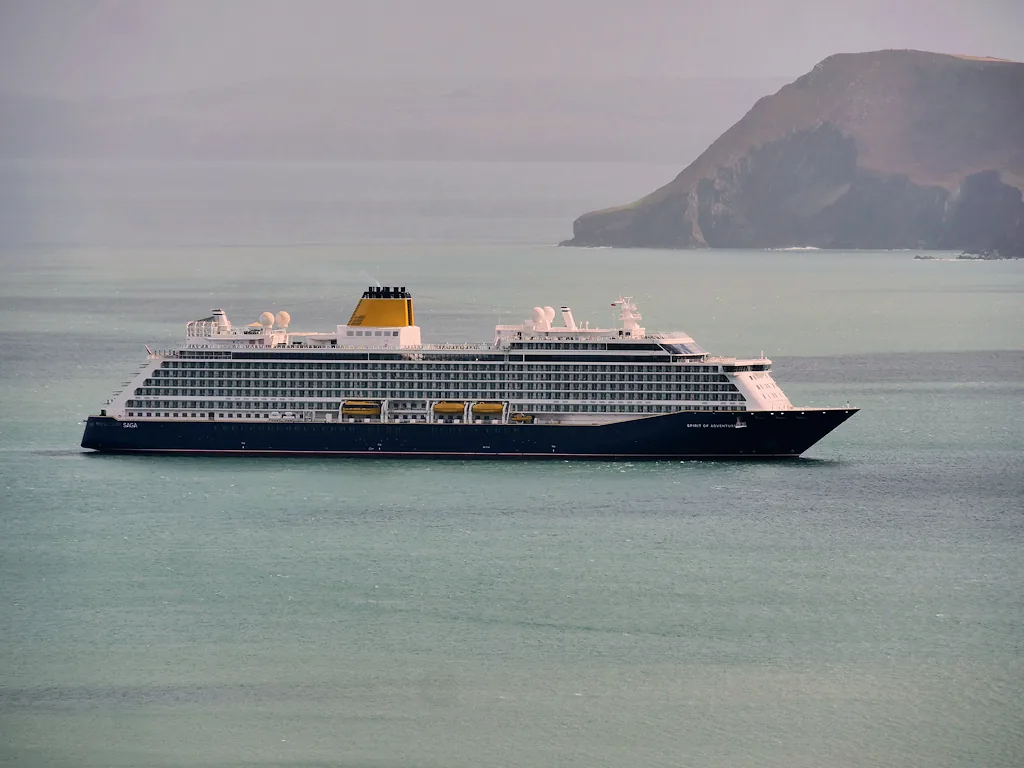
- Saga Cruises, on Spirit of Discovery and Spirit of Adventure, from Cruise Terminal 1
- Holland America Line, on Nieuw Statendam, from Cruise Terminal 2
- Carnival Cruise Line, on Carnival Legend, from Cruise Terminal 2
The Night Before
Dover is a long way from most of the country and ships berth from 04:00, with check-in windows that start early. Driving down on the morning of departure works from Kent and much of the south east and is optimistic from anywhere else.
Ships berth at Dover from 04:00 and check-in windows follow, so an allocated slot can fall well before mid morning. Confirm yours before deciding whether to drive down on the day, rather than assuming a Southampton-style timetable.
Staying locally the night before puts you twenty minutes from the terminal instead of four hours, and Dover has the advantage that the castle, the White Cliffs and the town are all worth an afternoon in their own right rather than being somewhere you merely sleep.
If Dover Is a Stop Rather Than Your Start
Most ships at Dover are calling rather than turning around. If yours is one of them you will probably be at WD4, and the walk along the marina curve brings you out on the seafront with the castle above you and the cliffs to the east.
YMS run their hop-on, hop-off bus between the terminals, the stations, Market Square and Dover Castle, with tickets from the driver valid all day. The last bus back departs an hour before your ship sails, and on turnaround days the service is reduced, so check the day’s times when you step off.
Frequently Asked Questions
Your boarding pass names your terminal, and that is the one to go by. As a guide, Saga sails from Cruise Terminal 1, and Carnival and Holland America from Cruise Terminal 2. The port publishes a schedule showing the terminal for every ship.
Not in either terminal, so eat before you arrive or wait until you are on board. Both buildings have water dispensers.
Not inside the port: the nearest cash machine is the BP garage on Limekiln Street and the nearest bureau de change is at White Cliffs Park. Both are worth sorting before you travel.
There is no left luggage at Dover, before or after a cruise, so plan around carrying whatever you bring with you.
About two miles, which is a 30 to 40 minute walk. There is a taxi rank outside the station, and a station shuttle operates on some dates but not all.
Use CT17 9DQ for sat navs. That is the postcode the parking operator gives drivers, and it matters at Dover because the ferry port is far larger and easy to end up in by mistake.
The port car parks have no charging points, so arrive with enough range for the journey home.
How We Verify This Advice
We aim for practical, low-risk guidance. Before publishing and during updates, we check core planning details against official sources and current operator information.
What We Check
- Berth and terminal details, including whether the port is walkable or requires a transfer
- Transport options and realistic return timing for different port types
- Details that change frequently, such as fares and schedules, with up-to-date notes where relevant
Typical Sources
- Official port authority and terminal updates
- Cruise line port notes and day-of-call instructions
- Local transport operators and official tourism resources